In recent years, American universities have become more than just centers of learning. They have turned into battlegrounds where debates over politics, culture, and freedom of speech are fought daily. Figures like Charlie Kirk, the conservative activist and founder of Turning Point USA, have played a prominent role in these confrontations.
But beyond the heated rhetoric and protests, a darker issue lingers: the growing risk of political violence. While no recent event has taken Kirk’s life—contrary to rumors circulating online—the broader concern is very real. The U.S. has seen a troubling rise in threats, intimidation, and, in some tragic cases, attacks on public figures across the political spectrum.
The Campus as a Flashpoint
College campuses have historically been places where ideas collide. From Vietnam War protests in the 1960s to debates over racial justice in the 2020s, students have always demanded space to challenge authority and question national values.
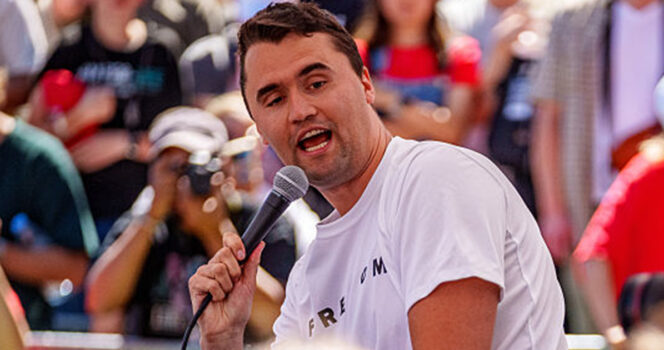
In today’s polarized climate, however, these confrontations often revolve around guest speakers. Charlie Kirk, known for his staunch defense of traditional values and outspoken support of Donald Trump, has become a lightning rod for these debates. His “American Comeback Tour” regularly draws packed auditoriums and, at times, equally large protests.
At Utah Valley University in 2023, for example, more than 7,000 people signed a petition to stop Kirk from speaking on campus. Similar incidents have unfolded at other universities nationwide, with administrations forced to balance free speech rights against student safety concerns.
A History of Political Violence in America
While it’s crucial to clarify that Kirk has not been assassinated—claims circulating on some fringe websites are false and dangerous—the fear of political violence is not unfounded. The U.S. has a long history of such tragedies:
-
President Abraham Lincoln was assassinated in 1865 during a deeply divided period of Civil War.
-
Civil rights leader Martin Luther King Jr. was shot in 1968, silencing one of America’s most powerful voices for justice.
-
Senator Robert F. Kennedy was killed in the same year while running for president.
-
More recently, Representative Gabrielle Giffords was gravely wounded in 2011 at a community event in Arizona, and Representative Steve Scalise was injured in 2017 during a congressional baseball practice.
These events remind us that political violence is not an abstract fear—it is part of America’s history, and vigilance is required to prevent its return.
Charlie Kirk’s Role in the Debate
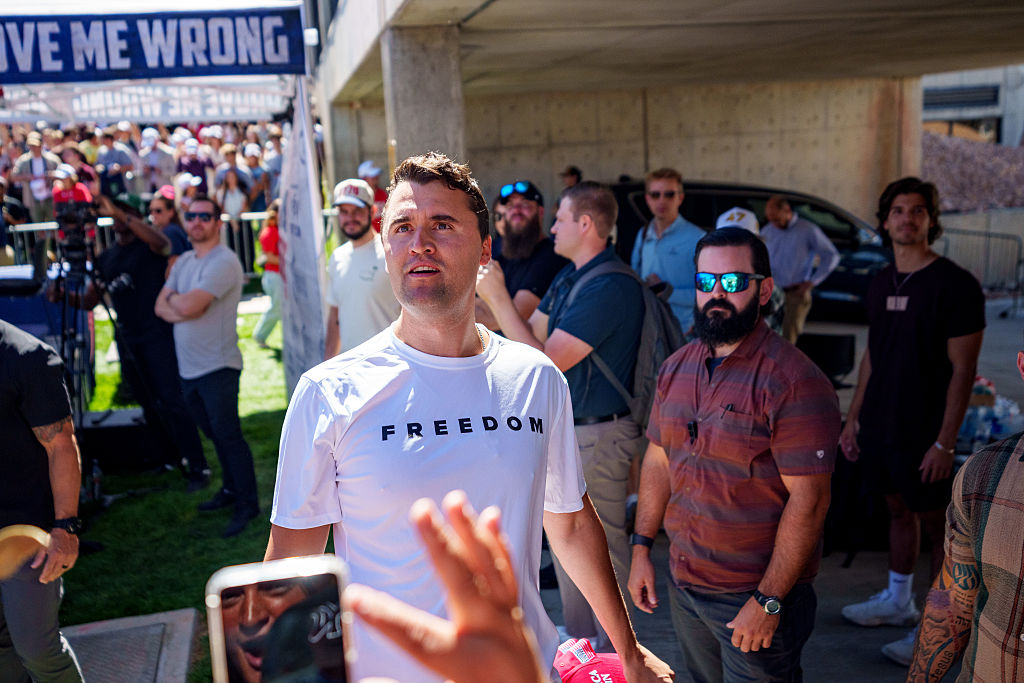
Charlie Kirk, at just 31 years old, has become one of the most recognized conservative voices among American youth. As CEO and co-founder of Turning Point USA, his mission has been to promote conservative values on college campuses, where liberal ideologies often dominate.
Kirk is known for his fiery exchanges with students, his unapologetic defense of the Second Amendment, and his critiques of progressive cultural movements. For his supporters, he embodies courage in the face of cancel culture. For his critics, he represents a divisive force exploiting polarization for political gain.
Either way, his presence sparks conversation, and it is precisely this intensity that makes events involving him—and other controversial speakers—potential flashpoints for unrest.
The Dangerous Spread of False Narratives
The rumor that Charlie Kirk was assassinated is a clear example of how misinformation spreads online. Posts with dramatic headlines and fabricated quotes have circulated across social media platforms, causing confusion among readers.
This is part of a broader problem: fake news and manipulated narratives have become weapons in political battles. In some cases, these stories are designed to inflame tensions, sow distrust, or generate clicks.
For democracy to function, it is vital that citizens can distinguish fact from fiction. False reports of political assassinations are not only irresponsible but also risk inspiring real-world violence.
Free Speech vs. Safety on Campus
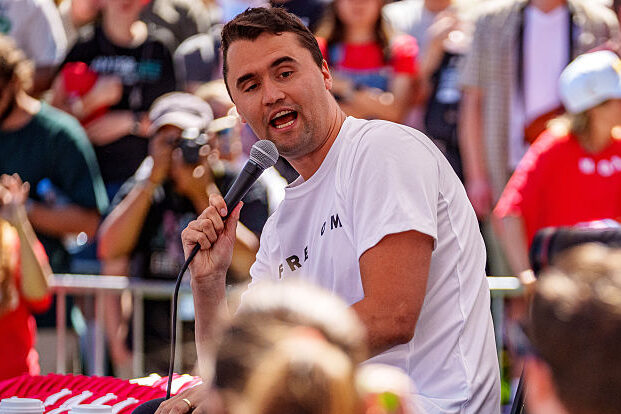
The tension between protecting free speech and ensuring safety is at the heart of today’s debate. When controversial figures like Kirk visit campuses, university leaders face multiple pressures:
-
Supporters demand open dialogue and the right to hear voices often excluded from academic spaces.
-
Protesters argue that such speeches promote harmful rhetoric or make marginalized groups feel unsafe.
-
Administrators must weigh the cost of security, the potential for unrest, and the university’s reputation.
The result is often an uneasy compromise: events go forward but under heavy police presence, barricades, or even relocation. In rare cases, speeches are canceled altogether—a move that fuels the narrative of censorship.
The Shadow of Violence
While most campus events remain peaceful, there have been alarming examples of violence connected to political polarization. Heated arguments have occasionally spilled into physical confrontations. Threats against high-profile speakers are not uncommon.
Experts warn that this environment—where political disagreements are viewed as existential battles—creates fertile ground for radicalization. When people see opponents not as fellow citizens but as enemies, the risk of violence increases dramatically.
Leaders Call for Civility
Political leaders across the spectrum have spoken out against violence as a tool of political discourse. After past attacks on members of Congress, both Republicans and Democrats emphasized the need to reject political violence in all forms.
Even leaders who disagree sharply with figures like Charlie Kirk acknowledge that violence is never an acceptable response. California Governor Gavin Newsom, for example, has previously clashed with conservative activists but has also condemned threats and harassment.
The message is clear: passionate debate is a cornerstone of democracy, but violence destroys the very freedoms it claims to defend.<