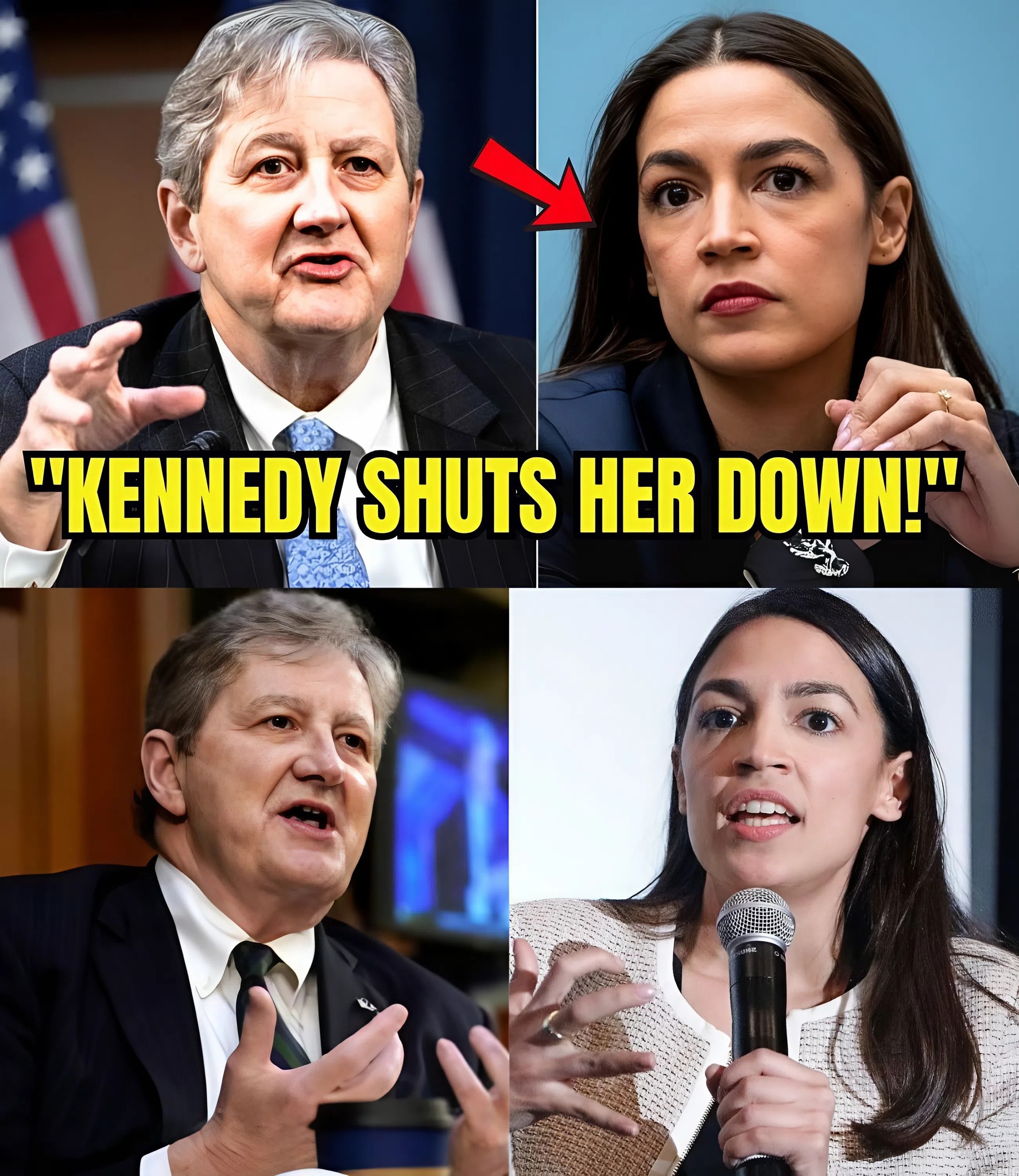
Representative Alexandria Okaziocortez AOC takes the House floor to defend her controversial vote against a resolution honoring the late Charlie Kirk, mocking him as ignorant and uneducated. But the moment sparks outrage when Senator John Kennedy steps in with a fiery response that flips the entire narrative.

What started as a routine speech quickly escalates into a dramatic showdown, leaving the chamber and the nation in shock. The chamber was packed. Lawmakers shifted in their seats, their faces taught with anticipation. Reporters leaned forward, pens poised as cameras blinked red in the dim light. The house floor was always a crucible of tension these days.
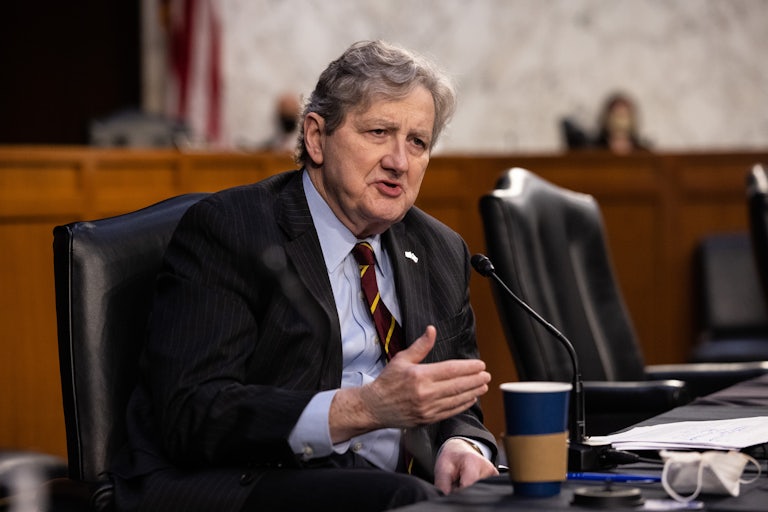
But tonight, the air felt heavier, charged with an undercurrent of grief and unrest. Senator John Kennedy, a respected voice from Louisiana and a stalwart of the Republican party, had been invited as a guest to observe the session. His presence a nod to his close ties to conservative causes and his reputation for sharp principled oratory.
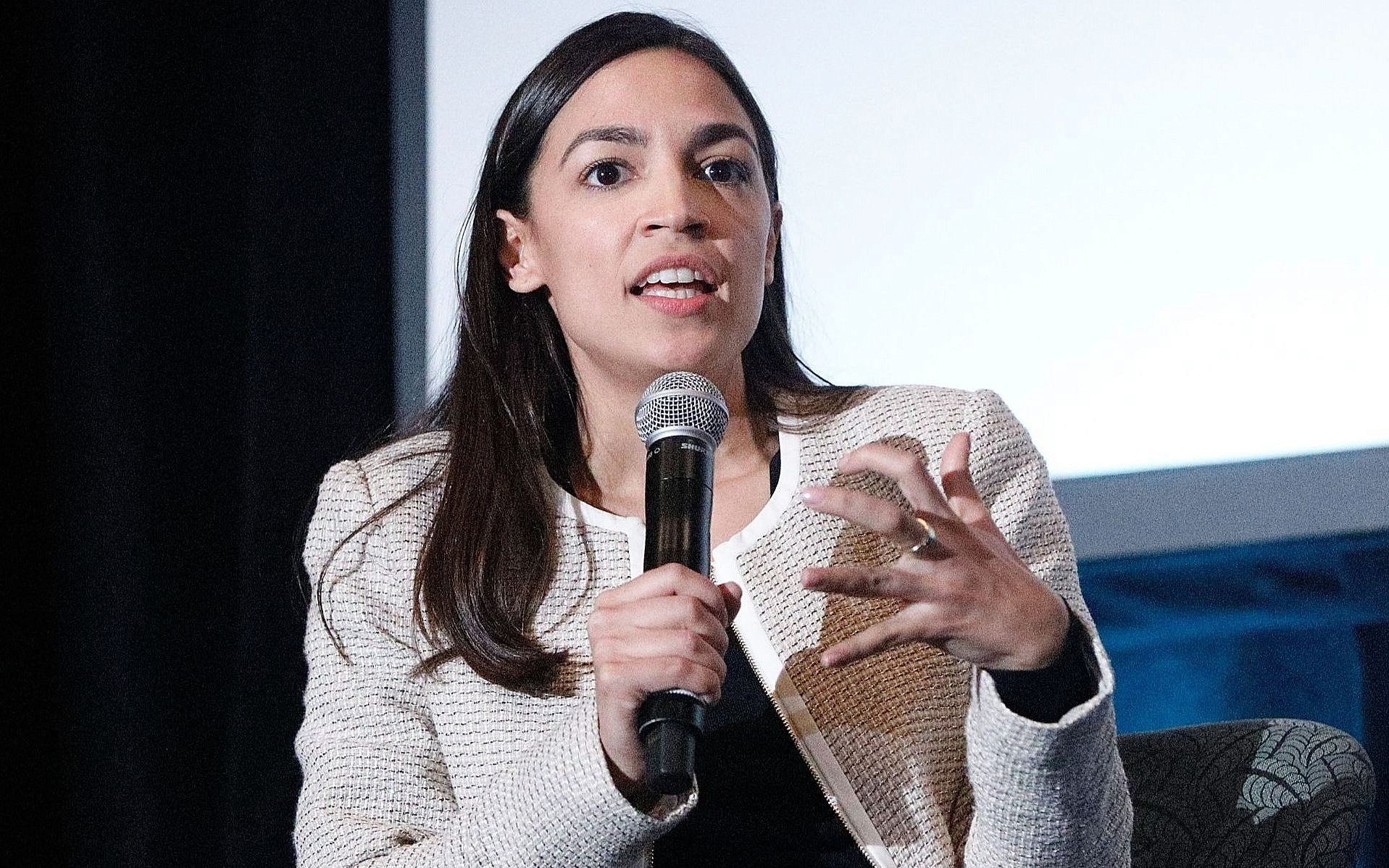
He sat quietly in the visitors section, his eyes steady, taking in every detail of the unfolding scene. Representative Alexandria Okaziocortez rose from her chair. Her heels clicked sharply across the marble floor, each step echoing in the near silent chamber. Everyone knew she had voted no on HR. 38. The resolution honoring Charlie Kirk, a prominent conservative figure whose recent assassination at a university debate had shaken the nation.
Now she was about to explain herself. The pain of Kirk’s death still lingered raw and unhealed. In the gallery his family sat their faces etched with sorrow. His widow clutched their youngest child to her chest while their older son stared at the floor. his small hands balled into fists.
The wound was fresh, seeping through every corner of the capital. When AOC reached the microphone, she didn’t soften her tone out of respect for the grieving. Instead, she raised her voice sharp and unyielding. “We must be clear about who Charlie Kirk was,” she declared her words slicing through the silence. His rhetoric was ignorant. His beliefs were uneducated. He sought to disenfranchise millions of Americans.
Gasps rippled across the chamber. Some lawmakers covered their faces in disbelief. Others shook their heads stunned. Charlie’s widow buried her face in her hands, her shoulders trembling. The house floor, meant to be a place of deliberation, had become a stage for tearing open wounds before they could even begin to heal. AOC’s words poured out like a calculated assault.
She cited old remarks, selectively chosen quotes, and controversial moments, each one framed to paint Kirk not as a man, but as a caricature of division. Her speech was unrelenting. Kirk’s legacy was one of discord. To honor him with this resolution is reckless. It inflicts pain on millions of Americans still grappling with the shadows of systemic injustice.
Members of Congress sat frozen. Some Democrats nodded hesitantly, but most could not mask their discomfort. They sensed this moment would not fade quietly. It would ignite a firestorm. The cameras panned to the gallery where Charlie’s children sat rigid tears streaming down their young faces. They couldn’t comprehend why their father taken so violently was being vilified in this sacred space.
On social media, AOC’s speech exploded into the public consciousness. Hashtags flared with outrage and division. Some praised her boldness, calling it a stand against harmful rhetoric. Others condemned her as heartless, attacking a man who could no longer defend himself.
Across the city, Senator John Kennedy sat in a nearby office watching the live broadcast. His hands rested calmly on the desk, but his eyes burned with resolve. Charlie Kirk had been a friend of fellow fighter for the values they both held dear. To see his name dragged through the mud in death was an affront Kennedy boy could not let pass. Known for his incisive wit and unyielding commitment to truth, Kennedy was not one to stay silent when principle was at stake.

When AOC finished, she stepped back from the microphone with a look of defiance, as if she had delivered a decisive blow. A heavy silence fell over the chamber, not applause, not even polite acknowledgement, but a suffocating stillness. The speaker called for order, but the room was already unraveling, buzzing with the weight of unspoken grief and rising anger.
John Kennedy, though a senator and not a regular presence on the House floor, had been granted the rare privilege of attending due to the gravity of the occasion and his connection to Kirk’s work. His chair creaked as he stood, drawing every eye in the room. Cameras swiveled. Reporters scribbled furiously. The chamber braced itself.
Kennedy’s presence commanded attention, tall composed with a quiet intensity that belied his folksy demeanor. He walked to a microphone designated for guest remarks, his steps deliberate. Lawmakers leaned forward. Some Democrats whispered nervously. This wasn’t planned. No one expected the senator from Louisiana to take the floor. He reached the microphone and the gallery fell silent.
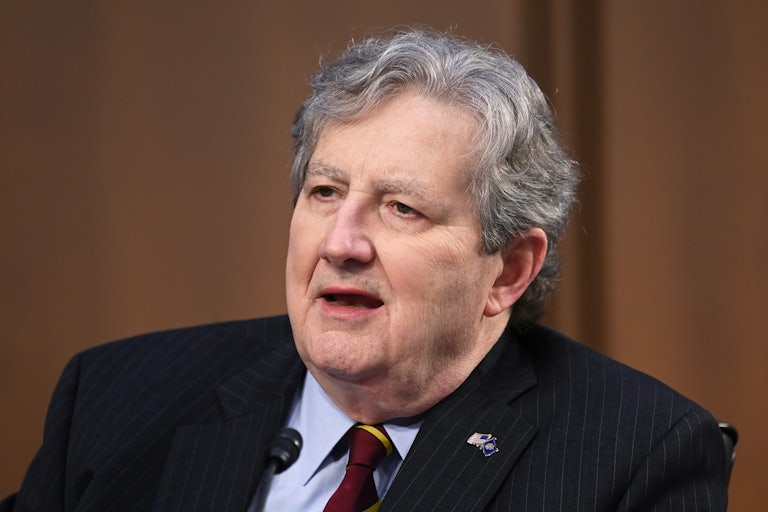
Even AOC shifted in her seat, perhaps sensing she had stirred something far larger than herself. Kennedy paused, his gaze settling on Charlie’s family in the gallery, then sweeping back to the chamber. His voice, low and steady, with a southern cadence, broke the silence. What I just heard was not courage. It was cruelty.
It was a grave insult to a man who can no longer defend himself, and it will not go unanswered. The chamber erupted in gasps. The showdown had begun. Kennedy’s calm delivery carried a weight that no shout could match. Every lawmaker knew this was no ordinary rebuke.
This was Senator John Kennedy, a man whose eloquence and moral clarity had earned him respect across aisles defending a fallen ally. He turned his eyes locking onto AOC. His face was steady, but his words cut with precision. What you just delivered wasn’t a defense of principle. It was a smear meant to tarnish a man who cannot speak back. That isn’t leadership. It’s cowardice dressed up as conviction.
Gasps filled the air again. AOC shifted uncomfortably, her composure faltering for the first time. Kennedy’s gaze swept the room. Charlie Kirk was many things. A husband, a father, a man who gave his life to engaging young Americans on ideas of faith, freedom, and opportunity.
To reduce him to a handful of outof context quotes without mercy is not just dishonest, it’s cruel. In the gallery, Charlie’s widow lifted her head. Tears streamed down her face, but a flicker of hope appeared in her eyes. Someone was standing up for her husband’s memory, and the chamber could feel the shift. Kennedy was only getting started. He leaned into the microphone, his voice firm, but measured.
Let’s talk about timing. Congresswoman Okazio Cortez didn’t just come here to speak. She sent out a fundraising email attacking Charlie Kirk before she even stepped to this floor, and whispers of her ambitions for higher office are already circulating. The chamber buzzed with murmurss, heads turned. Reporters scribbled furiously. This isn’t about healing.
Kennedy continued his voice rising just enough to command the room. It’s about using a man’s death, a father’s murder, to advance personal agendas. AOC’s expression hardened, but she remained seated. For the first time, the spotlight was no longer hers. Kennedy’s tone sharpened his words, carrying the weight of conviction. You called Charlie uneducated, ignorant. That’s projection.
The truth is, you’ve taken snippets and twisted them into falsehoods. Anyone who watches the full context knows it, but you count on folks being too busy to verify. That’s deceit, plain and simple. In the gallery, Charlie’s teenage son looked up, his fists clenched on the armrest for the first time since his father’s death. Pride pierced through his grief.
The senator’s words weren’t just defending his father. They were restoring his legacy. The speaker’s gabble struck hard, calling for order, but the chamber was beyond control. Emotions swirled like a storm rage, grief, vindication. Kennedy’s voice cut through it all. Disagreement with a man’s politics is never a license to strip away his humanity and death.
You say you pray for Charlie’s family, but prayers without respect are empty. They’re theater. They mean nothing. The gallery erupted in muffled sobs. Charlie’s widow covered her mouth, trembling. Her grief filled the chamber louder than any applause. Kennedy’s words grew more personal. Charlie was a friend. He wasn’t perfect.
None of us are. But he loved this country. He loved his family. And he believed deeply that America could be better for everyone. To call that ignorance is not just wrong. It is profoundly misguided. Every eye was on him. Now Republicans sat straighter while some Democrats looked shaken, unsure how to respond.
The narrative had shifted before their eyes. For the first time that night, AOC appeared diminished. Her words overshadowed by Kennedy’s moral clarity. The nation was watching, and John Kennedy had seized the floor. By now, millions of Americans were glued to their screens. The House floor was live on C-SPAN, but clips of Kennedy’s opening remarks had already gone viral.
Phones buzzed in homes, offices, and public spaces. Families huddled together, some in anger, many in awe. In Louisiana, a small community that had long admired Kennedy paused their evening routines to watch. An elderly woman whispered through tears, “That’s our senator speaking truth like only he can.” Back in the chamber, AOC shifted restlessly, whispering to a colleague. Her earlier confidence was fading.
Kennedy looked across the room, then directly into the cameras. This isn’t just about politics. This is about who we are as a people. Do we strip dignity from the fallen because we disagreed with them? Or do we find the strength to honor life even amid differences? The words struck the nation like a clarion call.
Social media erupted with hashtags like #stand with Charlie and Hatch Kennedy. Speaks truth. The tide was turning. As Kennedy spoke, all eyes turned to the gallery. Charlie Kirk’s widow sat upright, tears streaming down her face. She clutched her child’s hand, whispering something inaudible. Her grief was raw, unfiltered, and heartbreaking.
When Kennedy said Charlie deserves honor and respect in death, not smears from the House floor, she nodded slowly, her lips trembling. The sight pierced lawmakaker’s hearts. Even those who disagreed with Kirk’s views felt the weight of humanity pressing on them. For a moment, it wasn’t about parties. It was about people.
Reporters captured the image, the widow’s tear streaked face framed against the marble gallery. Within minutes, it was plastered across news feeds with captions like pain no politics should touch. Kennedy turned back to AOC, his tone hardening. You claimed to pray for this family, but what you did tonight wasn’t prayer. It was exploitation. You took their pain and turned it into fuel for your agenda.
That is not leadership. That is cruelty. The widow covered her face again, sobbing openly. The chamber had become a courtroom, and AOC was losing her case. For what felt like an eternity, no one dared interrupt John Kennedy. The speaker’s gavvel tapped weakly, but the room was beyond parliamentary order, gripped by something deeper.
Kennedy’s words rolled on each one, sharper delivered with the precision of a man who had honed his craft in years of public service. You accused Charlie of ignorance, but ignorance is speaking without full context. Ignorance is cherry-picking sound bites while ignoring a man’s life’s work. Ignorance is what we witnessed tonight.
AOC rose to her feet as if to object, but before she could reach the microphone, the chamber broke into applause, not just from one side, but from scattered members across the aisle. Republicans clapped firmly while even a few Democrats bowed their heads in quiet agreement.
The sound grew cautious at first, then louder, echoing through the chamber. Kennedy paused, letting it wash over the room. His face remained solemn, respectful, but his message had landed. AOC froze midstep, caught between defiance and humiliation. For once, her words weren’t the headline. John Kennedy had stolen the floor, the cameras, and the heart of a grieving nation.
And everyone knew this was just the beginning. The applause from the chambers scattered corners faded into a tense hush as Senator John Kennedy stood firm at the microphone. His presence a beacon of steady resolve amid the storm. The initial shock of his intervention had settled, but the air remained electric, charged with the raw emotions that AOC’s speech had unleashed.
Kennedy, with his characteristic composure honed from years of navigating complex debates, was not one to let the moment slip. He had begun his response, but now he delved deeper, methodically, dismantling the arguments laid out before him, while lifting up the humanity at the heart of the tragedy. Kennedy’s voice, laced with that unmistakable southern draw, carried a quiet authority that demanded attention.
He didn’t raise his volume to match the chamber’s chaos. Instead, he spoke with a measured intensity that drew listeners in. “Congresswoman,” he began addressing AOC directly, but without malice. “Your words tonight have painted a picture that’s as incomplete as it is unkind.” Charlie Kirk didn’t just spout rhetoric.

He built bridges to young minds across this great nation, encouraging them to think critically about their future. To label that as ignorance overlooks the thousands he inspired, the dialogues he sparked, and the lives he touched. The chamber listened intently. Kennedy’s approach was respectful, even as it was incisive.
He avoided personal attacks, focusing instead on the facts and the broader implications. You’ve cited snippets from speeches, but let’s be fair, context matters. In full, those remarks were calls for open debate, not division. Twisting them now when Charlie can’t respond isn’t bold. It’s beneath the dignity of this house.
Murmurss of agreement rippled through the Republican side, and even a few Democrats nodded subtly, recognizing the logic in his words. But Kennedy didn’t stop at rebuttal. He turned his focus to the gallery where Charlie Kirk’s family sat, their pain palpable. “Look at them,” he said softly, his voice dropping to a near whisper that nonetheless echoed through the microphones.
“A widow holding her children close, a son grappling with loss, too heavy for his young shoulders. These are not political props. They are people hurting deeply. Your words, Congresswoman, have added salt to their wounds. Is that the unity we strive for? Or is it a reminder that in our zeal for principle, we must never forget compassion? The camera feeds captured the moment perfectly.
Kennedy’s gentle gesture toward the family, the widow’s tear-filled eyes meeting his with a mix of gratitude and sorrow. The nation watching live felt the emotional pull. Social media already ablaze from the initial exchange now flooded with clips of this poignant plea. Hashtags like Kennedy for humanity and #protect the grieving gained traction shared by users from all walks of life who saw in Kennedy a defender of basic decency.
AOC still seated but visibly agitated interjected from her spot her voice carrying over the murmurss. Senator, you’re romanticizing a legacy that harmed marginalized communities. We can’t ignore the real impact of his words. Kennedy paused, allowing her to speak, demonstrating the respect he advocated.
Then, with unwavering calm, he responded, “I hear you, Congresswoman. Disagreement is the lifeblood of democracy. But there’s a line between critique and cruelty, especially in death.” Charlie engaged with diverse audiences, often in spaces where tough conversations were needed. He challenged ideas, yes, but he did so to foster understanding, not hate.
This contrast couldn’t have been starker. AOCC’s delivery had been fiery accusatory. Kennedy’s was thoughtful bridging, his sincerity shown through a testament to his reputation as a senator who prioritized substance over spectacle.
Lawmakers who had been on the fence began to lean his way, their expressions softening as he wo logic with empathy. “We’ve all got our differences,” Kennedy continued. “But stripping a man of his humanity after he’s gone, that’s not progress. That’s regression. And it sets a dangerous precedent for how we treat one another in this divided time.
As Kennedy spoke, the impact rippled outward. In living rooms across America, families paused their dinners to watch. A teacher in the Midwest turned to her students during an online class, using the moment as a teachable one about respectful discourse. In Louisiana, constituents who had long supported Kennedy felt a surge of pride sharing videos with captions praising his stand for truth and kindness.
The senator’s words weren’t just resonating in the chamber. They were igniting a national conversation. Kennedy pressed on, addressing the fundraising angle with tactful directness. And let’s address the elephant in the room turning grief into gain. Sending out emails that capitalize on this tragedy while families mourn isn’t advocacy. It’s opportunism.
We owe it to the American people to rise above that, to lead with integrity. AOCC’s face tightened, her earlier momentum slipping as Kennedy’s points landed one by one. She attempted another rebuttal, but the chamber’s growing support for Kennedy drowned it out with supportive murmurss. The emotional core remained the Kirk family.
Kennedy returned to them repeatedly, his voice infused with genuine concern. Those children up there, they deserve to remember their father as the man who fought for what he believed not as a villain in someone else’s narrative. Your prayers for them, Congresswoman, ring hollow without the respect to back them up. The widow nodded faintly. a small gesture that spoke volumes.
Her son’s eyes wide with a mix of confusion and relief fixed on Kennedy as if he were a lifeline in the turmoil. This focus on family humanized the debate, shifting it from partisan bickering to a universal truth about loss and respect. Public reaction was swift and overwhelming. News outlets initially framing the story as a political clash now highlighted Kennedy’s compassionate defense.
Commentators across networks praised his poise, noting how he turned a divisive moment into one of potential healing. On platforms like ex users posted heartfelt messages, Senator Kennedy just reminded us what real leadership looks like. Calm, kind, and courageous. AOC found herself on the defensive. Her attempts to regain control met with increasing resistance.
As Kennedy concluded this phase of his remarks, stepping back slightly, but remaining at the ready, the chamber applauded once more, this time louder, more unified. Even some across the aisle joined in, unable to ignore the power of his message. Kennedy had not only stood up, he had elevated the discourse, making AOCC’s position seem increasingly isolated.
The showdown was evolving with Kennedy’s steady hand, guiding it towards something greater than victory, a call for empathy in an era too often defined by division. As the nation absorbed his words, it became clear this was no mere rebuttal. It was a masterclass in principled leadership, one that would echo far beyond the marble walls of the House.
The tension in the House chamber had reached a boiling point, the air thick with unspoken accusations and raw emotion. Senator John Kennedy stood at the microphone, his steady gaze holding the room captive after his compelling defense. But the real turning point was about to unfold, not from the floor, but from the gallery above.
It was there, amid the marble and shadows, that Charlie Kirk’s widow rose slowly to her feet, her body trembling with a mix of grief and resolve. The chamber fell into an abrupt silence as all eyes turned upward. Please, she called out, her voice cracking but carrying across the vast space. Stop dishonoring my husband. He is gone, and my children deserve peace. Please, no more.
Her words hung in the air like a plea from the heart of the storm. The gallery, usually a quiet observer, had become the epicenter of the drama. Cameras zoomed in, capturing her tear streaked face, her hands gripping the railing for support. Her children clung to her sides, their small forms shaking as Saabs escaped them. The sight was heartbreaking, a raw display of vulnerability that transcended politics.
The chamber froze. Even the speaker hesitated, Gavl in hand, unsure whether to enforce order or allow this human moment to breathe. Lawmakers bowed their heads. Some wiped away tears of their own. AOC looked stunned, her earlier fire dimmed by the undeniable weight of a grieving widow’s cry.
This wasn’t scripted rhetoric. It was real pain laid bare for the nation to witness. Kennedy, ever the picture of composure, turned toward the gallery with a hand over his heart. You are not alone,” he said gently, his voice projecting warmth and solidarity. “America grieavves with you, and tonight your husband’s legacy is safe, not because of politics, but because truth and decency prevail over division.
” Kennedy’s words amplified the widow’s plea, transforming it into a rallying cry for compassion. He continued his tone blending logic with profound empathy. This family has endured unimaginable loss. To exploit their sorrow for political points isn’t just wrong. It’s a betrayal of the values we all claim to uphold.
Congresswoman, your ambition may drive you, but it shouldn’t come at the cost of a widow’s dignity or a child’s innocence. His critique was pointed yet principled avoiding vitriol while highlighting the opportunism in AOC’s approach. He referenced the fundraising emails subtly framing them as a symptom of a larger issue, the politicization of personal tragedy.
The public reaction was immediate and explosive as the widow’s outcry aired live social media platforms lit up like fireworks. Clips of her standing voice trembling spread virally accompanied by captions decrying the insensitivity on display. Hashtags such as grief not politics and art Kennedy stands strong trended nationwide drawing support from unexpected quarters.
Celebrities, community leaders, and everyday citizens shared stories of their own losses, praising Kennedy for his protective stance. News networks interrupted programming to replay the scene. Commentators speaking in hushed tones about the human moment that had pierced Washington’s armor.
In the chamber, Kennedy dominated the narrative, his presence a steady anchor amid the chaos. He wo in stories of everyday Americans, drawing parallels to how Kirk’s work had inspired diverse groups to engage in civic discourse. Charlie didn’t see color or creed he saw potential in every young person he met. To reduce that to ignorance dishonors not just him, but the countless lives he influenced.
His arguments were logical, backed by a deep understanding of policy and people. But it was the emotional resonance that captivated the room. Democrats who had initially supported AOC now exchanged uneasy glances, some slipping quietly from their seats to distance themselves from the unfolding backlash. AOC attempted a counterrising once more to the microphone with a determined expression.
This is about accountability, not exploitation. She asserted her voice steady, but lacking its earlier conviction. We can’t honor figures who perpetuated harm. But her words fell flat, drowned out by the chambers shifting mood. The widow’s intervention had changed everything. The optics were devastating, portraying AOC as insensitive to genuine suffering.
Murmurss of disapproval rippled through the aisles, and even her allies hesitated to applaud. Kennedy responded with grace. Accountability is vital, but so is timing and tact. Smearing a man in front of his mourning family isn’t accountability. It’s unnecessary cruelty. The media storm intensified outside the chamber.
Major networks looped the widow’s plea alongside Kennedy’s supportive remarks, framing him as the guardian of decorum. Pundits from various outlets lauded his handling, calling it a masterful display of statesmanship. On X and other platforms, users posted sidebyside comparisons, AOC’s accusatory speech versus Kennedy’s empathetic defense.
The Kirk family’s image became a symbol of politicized pain, evoking widespread sympathy. Donations surged to charities Kirk had championed, with many crediting Kennedy’s words for inspiring the outpouring. Back inside AOCC’s isolation grew palpable. Whispers among her party members hinted at internal rifts. A moderate Democrat was overheard saying, “She crossed a line.
This isn’t helping anyone. Republicans unified behind Kennedy pounded their desks in approval as he wrapped his points. We can debate policies fiercely, he concluded, but we must draw the line at desecrating the dead. That’s not who we are as Americans. The applause that followed was thunderous crossing party lines in spots a rare show of consensus in a divided house. The climax had shifted the entire dynamic.
What began as a partisan skirmish had evolved into a profound examination of empathy in public life. Kennedy through his unwavering advocacy had not only protected the Kirk family but also reminded the nation of the power of principled leadership. As the chamber struggled to regain composure, the echoes of the widow’s voice and Kennedy’s response lingered, setting the stage for lasting impact.
The House chamber, still reeling from the emotional crescendo of Charlie Kirk’s widow’s plea, and Senator John Kennedy’s resolute defense, settled into a profound silence. The speaker’s gavl had finally restored a semblance of order, but the weight of the moment lingered like a hymn, echoing through a cathedral.
Kennedy stood back from the microphone, his face solemn yet resolute, allowing the gravity of his words to settle over the room. He had not only defended a friend’s memory, but had shifted the entire conversation, turning a divisive clash into a call for unity and decency. As the nation watched the showdown transcended politics becoming a mirror held up to America’s conscience, this final chapter would not just conclude the night’s drama.
It would cement a legacy and impart a lesson that would resonate for years to come. Kennedy, sensing the moment’s significance, stepped forward once more, his voice softer now, almost reflective. This chamber, this nation, stands at a crossroads. He began his southern draw, carrying a quiet wisdom that hushed the room. We can choose to tear each other down to weaponize grief for gain.
Or we can choose to honor the humanity in every soul, even those we oppose. Tonight, we’ve seen both paths, and the choice is clear. His words were not accusatory, but invitational, urging lawmakers and viewers alike to reflect on their values. The cameras caught every nuance, broadcasting his message to millions who sat riveted in homes, diners, and community centers across the country.
The senator turned his gaze to the gallery where Charlie Kirk’s family sat, their tears now mingled with a quiet strength. to you,” he said, addressing the widow directly. “Know that America stands with you. Your husband’s memory is not defined by one speech or one vote. It’s defined by the love he gave, the ideas he championed, and the family he left behind.” The widow nodded, clutching her children close, her eyes reflecting gratitude.
Her son, still young, but bearing the weight of loss, mouthed a silent thank you that cameras captured sending another wave of emotion through the nation. Kennedy’s words were a bomb, not just for the Kirk family, but for a country weary of division. He continued weaving a broader lesson. We’re not here to agree on everything.
Debate is our lifeblood. But when we let disagreement strip away respect, especially in the face of death, we lose something vital. We lose our shared humanity. And that’s a loss none of us can afford. His voice carried the weight of experience grounded in years of public service where he had seen the best and worst of political discourse. The chamber, often fractious, seemed to pause, absorbing the truth of his words.
Outside the nation responded in kind. Social media already ablaze with clips of the widow’s plea and Kennedy’s defense now buzzed with a new narrative unity over division. Hashtags like #honor nothate and hash Kennedy. Leads trended globally, shared by people across political spectrums.
Vigils for Charlie Kirk, initially small and somber, grew into community gatherings where candles flickered in town squares and churchyards. In a small Ohio town, a pastor paused his sermon to read Kennedy’s words aloud, urging his congregation to choose compassion over conflict. Across America, families discussed the night’s events at dinner tables, teaching children about the importance of respecting others, even in disagreement.
AOC, meanwhile, sat quietly in her seat, her earlier fire extinguished by the weight of the moment. Her staff scrambled to draft a statement, but the optics were undeniable. The image of her standing against a grieving family had become a liability shared endlessly online with captions questioning her judgment. Even within her own party, cracks widened.
A senior Democrat whispered to a colleague, “She misread the room badly.” Another, a moderate from a swing district, slipped out of the chamber, unwilling to be tied to the backlash. AOCC’s attempt at a press conference was cancelled on her team’s advice as every word risked reigniting the firestorm.
Kennedy, by contrast, emerged as a unifying figure. His restraint, his refusal to descend into personal attacks, and his focus on principle over politics earned him admiration even from unlikely corners. News outlets from conservative to centrist praised his handling of the situation. A CNN commentator, typically critical of Republican figures, called it a rare moment of moral clarity in Washington.
Fox News ran headlines declaring Kennedy the voice America needed. The viral image of him consoling the Kirk family after his speech, his hand gently on the widow’s shoulder, her children clinging to him became a symbol of empathy in a cynical age. The impact extended beyond media.
Donations poured into charities Kirk had supported with many donors citing Kennedy’s speech as their inspiration. Community organizations launched initiatives to promote civil discourse inspired by his call to bridge divides. In schools, teachers used clips of the night’s events to spark discussions about respect, empathy, and the consequences of words.
A high school in Louisiana even organized a debate club in Kirk’s memory with a mission to foster open dialogue without malice, a direct nod to Kennedy’s message. As the session adjourned, lawmakers filed out, but the mood was different. Republicans walked with a renewed sense of purpose, unified by Kennedy’s stand.
Democrats, some shaken by the night’s events, exchanged quiet words about the need for introspection. One veteran lawmaker, a Democrat nearing retirement, approached Kennedy outside the chamber. “You did good tonight, John,” he said, shaking his hand. “You reminded us what this place should be about.” The exchange caught by a nearby reporter spread online, further cementing Kennedy’s role as a figure of crossartisan respect.
The next morning, Charlie Kirk’s widow gave a brief emotional interview on a national network, her children by her side. I didn’t expect politics to hurt this much. After losing Charlie, she said, her voice trembling. But Senator Kennedy gave us a shield. He stood up for my husband’s memory and for us. That meant everything.
Her words cut through the noise of punditry, resonating with viewers who saw their own families in her pain. A mother in Texas tweeted, “I cried with her. Thank God for Kennedy’s heart.” The interview became the most viewed clip of the day, surpassing even Kennedy’s speech in reach.
The lesson of the night was clear, and Kennedy drove it home in a brief statement to the press as he left the capital. “This wasn’t about winning an argument,” he said, his voice steady but warm. It was about standing for what’s right, honoring a family’s grief, respecting a man’s life, and reminding us all that we’re better than division.
His words became a rallying cry for those seeking a path beyond polarization. Pastors quoted him in sermons. Educators used his speech in classrooms, and parents shared it with their children as a lesson in integrity. The educational takeaway. The showdown on the House floor was more than a political clash.
It was a lesson in the power of words and the responsibility to wield them wisely. Kennedy’s stand taught that true leadership lies not in tearing others down, but in lifting up shared values, especially in moments of loss. It challenged listeners to ask, “How do we treat those we disagree with? Do we honor their humanity even in death?” The story urged Americans to choose empathy over ambition, to prioritize dignity over division.
It was a call to reflect on personal actions, to engage in discourse with respect, and to remember that behind every name is a human story deserving of care. This lesson rooted in compassion resonated as a guide for navigating not just politics but life. By evening, cities across America lit candles in memory of Charlie Kirk, not just for his ideas, but for the universal truth Kennedy had defended that no one’s memory should be trampled for political gain.
On college campuses, students who had once clashed with Kirk’s views held moments of silence, reflecting on the cost of divisiveness. Senator John Kennedy, through his words and actions, had transformed a night of conflict into a beacon of hope. He stood not just as a senator, but as a guardian of America’s conscience, proving that even in the darkest moments, compassion and truth could light the way forward. Lord.