“I’ll be blunt, the way folks in Louisiana say it: this is utterly unacceptable. A young National Guard member like Sarah Beckstrom—standing in the line of danger to protect the country—now lies on the edge of life and death because we cannot keep our capital safe. This is not a ‘civilized society’; this is a failure.”
These words, delivered with unflinching clarity by Senator John Neely Kennedy, cut through the usual political rhetoric like a knife. In the wake of the recent shooting near the White House that left Sarah Beckstrom critically wounded, Kennedy’s statement reverberated across Washington, D.C., shaking lawmakers, residents, and the nation at large. It wasn’t just another routine condemnation of gun violence; it was an indictment of the city, the government, and the very system that is supposed to protect its citizens.
The incident unfolded late yesterday afternoon, during a period that many believed was relatively quiet in the nation’s capital. Sarah Beckstrom, a 23-year-old member of the National Guard, was on duty near one of the less-trafficked entrances to the White House grounds when the shots rang out. Her father, Gary Beckstrom, later recounted to The New York Times the harrowing moments when he held his daughter’s hand as paramedics worked frantically to stabilize her. “I am holding her hand right now. She has a fatal wound. It’s not going to recover,” he said, his voice barely steady, weighed down by the reality no parent should ever face.
Kennedy did not mince words when addressing the tragedy. He called out the glaring failures in the capital’s security apparatus, emphasizing that the city’s inability to safeguard even a National Guard member—someone trained, armed, and positioned specifically for defense—speaks volumes about the state of public safety. “We have thousands of politicians in this city who love to hold press conferences and talk in grandiose terms about community safety,” Kennedy said. “Yet when it comes to real danger, they remain silent or shift the blame. Americans are exhausted by this pretense.”
The senator’s comments struck a chord not only in Washington but across the country. Citizens who had grown frustrated with the seeming impunity of violent acts in the capital, and the lack of effective responses from lawmakers, found in Kennedy a voice echoing their fears and anger. His words reminded everyone that safety, once taken for granted in the nation’s capital, is now precarious, and that even those who dedicate their lives to protection can be left vulnerable.

Eyewitnesses to the shooting described chaos and confusion in the moments following the attack. Law enforcement officers rushed to the scene as bystanders scattered, some attempting to capture footage on their phones even as bullets continued to fly. The assailant, whose identity has not yet been confirmed, was apprehended shortly afterward. Sources indicate that the individual had a history of erratic behavior and previous run-ins with the law, raising questions about the efficacy of existing monitoring systems and gun control measures in preventing such individuals from accessing firearms.
Medical personnel at the scene provided critical care, but the severity of Beckstrom’s injuries left little hope. The incident underscores the daily risks faced by National Guard members and other protective services personnel, whose work often goes unnoticed until tragedy strikes. Kennedy’s remarks highlighted this point, stressing that society must do more than pay lip service to the bravery of those who serve. “Sarah Beckstrom represents the best of America,” Kennedy said. “Pray for her, and pray that Washington finally wakes up.”
The shooting also reopened a national debate over gun control and security protocols in high-risk areas. Analysts have pointed out that, despite the heavy presence of law enforcement around the White House, gaps in surveillance and response can leave individuals vulnerable. Critics argue that this incident is symptomatic of broader systemic failures, from inadequate funding for protective services to bureaucratic inertia that prevents swift action in moments of crisis.

While Kennedy’s statement drew immediate attention, it also ignited controversy. Some lawmakers criticized the senator for using the tragedy to advance a political agenda, while others praised him for confronting uncomfortable truths. The broader conversation, however, quickly turned to the human dimension of the event—the harrowing experience of Sarah Beckstrom, the anguish of her family, and the profound sense of vulnerability that now pervades the nation’s capital.
Gary Beckstrom’s account of holding his daughter’s hand as she fought for her life resonated deeply with the public. Social media platforms were flooded with messages of support and outrage, highlighting the emotional impact of the event. Many citizens questioned why safety measures had failed, and why even a trained National Guard member could be put in such a perilous position. Kennedy’s insistence on framing the event as a failure of the system, rather than merely an isolated incident, pushed these questions into the national spotlight.
Experts on public safety note that incidents like this are tragically predictable. Despite significant investment in security infrastructure, high-density urban centers remain vulnerable to determined individuals with malicious intent. The challenge, they argue, is not only technological but also cultural: ensuring that authorities take threats seriously, prioritize preventive measures, and respond decisively when incidents occur. Kennedy’s comments reflect a frustration that many feel—that despite repeated warnings and near-misses, Washington continues to operate in a reactive, rather than proactive, manner.
The political implications of the shooting are also significant. In the weeks following, discussions on Capitol Hill are expected to focus on whether new legislation is necessary to enhance protective measures for government personnel. There is growing pressure for Congress to enact policies that go beyond ceremonial statements and ceremonial gestures, demanding concrete action to prevent similar tragedies. Kennedy’s outspoken stance positions him as both a critic of the current administration and an advocate for tangible change, a dual role that is drawing both attention and scrutiny.
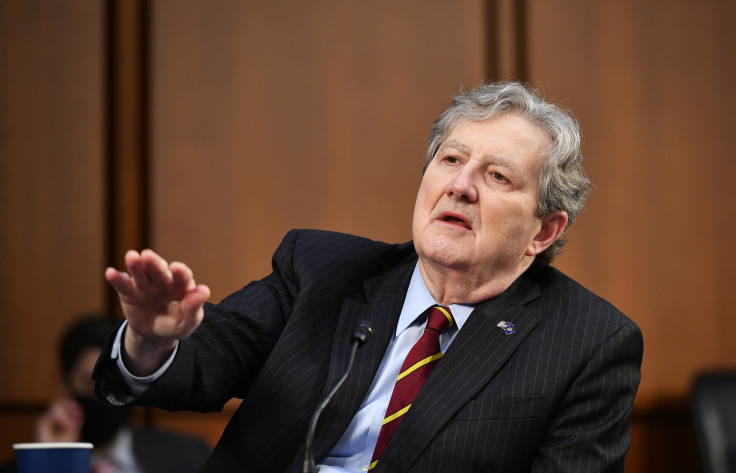
Amid the political and logistical debates, the human cost remains painfully clear. Sarah Beckstrom’s colleagues in the National Guard have rallied around her family, providing support and highlighting the dangers inherent in their service. Kennedy emphasized this solidarity, calling on citizens and officials alike to recognize the sacrifices made by those tasked with national defense. “This is not just a political talking point,” he said. “This is about real people, real families, and the real consequences of systemic failure.”
As the nation awaits further updates on Beckstrom’s condition, the incident continues to dominate headlines. The public’s appetite for transparency and accountability has never been greater, and Kennedy’s remarks have intensified calls for an honest reckoning with the vulnerabilities in America’s capital. From the streets of Louisiana to the corridors of power in Washington, citizens are demanding answers, action, and a commitment that tragedies like this will not be repeated.
In the end, the shooting near the White House is more than a news story; it is a stark reminder of the fragility of safety and the consequences of inaction. Senator Kennedy’s words, unflinching and unvarnished, capture the anger, fear, and sorrow felt across the nation. For Sarah Beckstrom and her family, the coming days will be a test of endurance and hope. For Washington, it is a test of accountability and the ability to prioritize the protection of those who serve.
While investigations continue and political debates unfold, one fact remains undeniable: the vulnerability of the nation’s protectors has been laid bare. Kennedy’s call for action, for acknowledgment of failure, and for meaningful change serves as both a warning and a challenge. The eyes of the country are now on Washington, waiting to see if words will translate into deeds, if outrage will result in reform, and if the tragic experience of one young National Guard member will finally compel a city and a nation to do better.

Sarah Beckstrom’s story, and the profound sorrow of her family, will not be forgotten. As the world watches, the question remains: will the nation learn from this failure, or will it continue to pretend that such tragedies are unavoidable? Kennedy’s voice, resonant and unwavering, urges the former, demanding that safety, justice, and accountability prevail—not only for Sarah but for every citizen who deserves to feel secure in their own country.
The incident near the White House is a cautionary tale, a call to action, and a moment that will be etched into the national consciousness. The silence that followed the shooting, the failures it revealed, and the grief it caused are a stark reminder that words alone are insufficient. Americans now watch and wait, hoping that those in power will finally act, and that Sarah Beckstrom’s bravery will not be in vain.
The nation stands at a crossroads: one path leads to accountability, reform, and protection for those who serve; the other leads to continued indifference and repeated tragedy. As Kennedy’s voice rings out over the nation’s capital, it is clear that the choice—and its consequences—rest in the hands of those who hold power in Washington.